All Categories
Featured
Table of Contents
- – The State of Regional Search and Brand Distanc...
- – GBP Management and the Increase of Real-Time I...
- – Hyper-Localized Material at Scale
- – Incorporating Local Inventory and Service Data
- – Technical SEO Requirements for Geo-Targeted Sy...
- – User Experience and the "Last Mile" of Search
- – Managing Reviews and Regional Credibility
- – Information Personal Privacy and Localized Tar...
- – The Future of Localized Voice and Visual Browse
- – The Need of Regional Autonomy Within National ...
The State of Regional Search and Brand Distance in 2026
By 2026, the mechanics of local search have actually moved far from easy keyword matching toward a sophisticated understanding of physical distance and intent-driven context. For brands managing several storefronts throughout regions like the local market, the obstacle is no longer simply appearing in search outcomes but supplying instant, localized energy. Modern geo-targeted content systems have actually become the requirement for bridging the gap in between a nationwide brand identity and the particular needs of a community.Search engines now focus on "Identity Graphs" that link a business's digital presence to its real-world activity. This indicates that a listing for Google Business Profile Optimization in 2026 is expected to reveal more than simply hours of operation. Users demand real-time stock, existing staffing availability, and even hyper-local ecological information that may affect service delivery. These systems must be automated yet sensitive sufficient to show the distinct character of different neighborhoods without manual intervention for every single single upgrade.
GBP Management and the Increase of Real-Time Interaction
Google Organization Profile (GBP) has progressed into a transactional user interface instead of a fixed map pin. In 2026, handling these profiles for multi-location brand names needs a main data orchestrator that presses updates immediately throughout numerous locations. When a consumer searches for a specific option, they are frequently looking for instant verification of accessibility. Brand names that successfully manage these signals see a significant increase in "zero-click" conversions, where the user finds whatever they require straight on the search results page page.High-performing profiles now integrate 3D store previews and localized video feeds. Current trends in Online Website Marketing Reputation indicate that visual confirmation of a location's atmosphere and present state is a leading factor in consumer decision-making. This level of detail requires a content system efficient in hosting and dispersing location-specific media that reflects the actual conditions in the immediate vicinity.
Hyper-Localized Material at Scale
The battle for multi-location brands has actually always been keeping a constant voice while appearing "regional" to every client. In 2026, AI-driven content engines have actually resolved this by utilizing regional information points to customize landing pages. Instead of a generic template, a page for a branch in the surrounding region might point out particular regional landmarks, weather-related service recommendations, or community events.This localization goes beyond switching a city name in a heading. It involves analyzing regional search patterns to see if customers in one location choose various terminology or have different pain points compared to those 50 miles away. Online Website Marketing Map Ranking provides a way to make sure that these nuances are caught without the need for a huge creative team for every postal code. By 2026, the focus has moved to "Micro-Moments" where material is served based upon the user's precise coordinate-level location and their previous interaction history with the brand.
Incorporating Local Inventory and Service Data
For organizations providing Google Business Profile Optimization, the combination of back-end inventory systems with front-end search results is non-negotiable. If a client in the nearby area sees a service noted, the system needs to verify that the particular devices or workers needed are offered at that exact minute. This real-time data syncing avoids the disappointment of "noting ghosting," where a consumer reaches a location only to find the service they saw online is presently unavailable.By 2026, local search algorithms are wise sufficient to penalize brand names that supply incorrect real-time data. This has caused the adoption of "Unified Local Feeds" where ERP data is fed directly into the geo-targeted material system. This guarantees that every digital touchpoint-- from the business website to third-party maps-- shows the ground fact of business operations.
Technical SEO Requirements for Geo-Targeted Systems
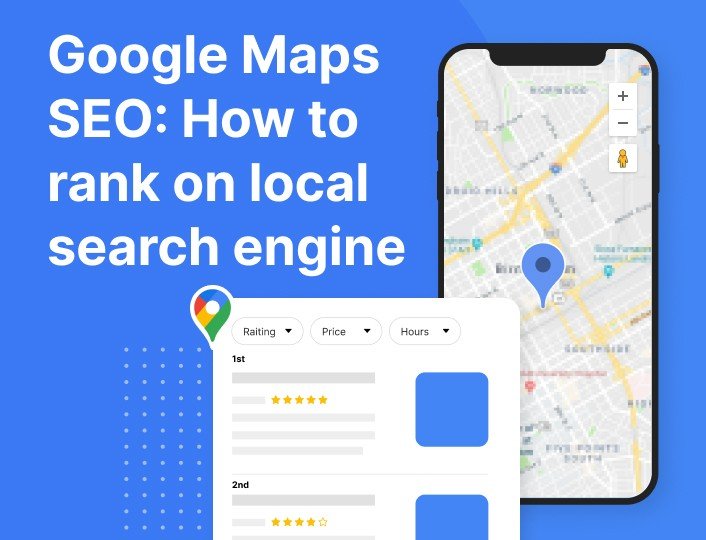
The technical structure of regional search in 2026 relies greatly on sophisticated Schema markup and JSON-LD structured data. Every location-specific page needs to interact its relationship to the parent brand name while highlighting its unique characteristics. This includes utilizing "AreaServed" and "ServiceArea" homes with identify accuracy. For those examining Online Website Marketing for Service Companies, the complexity of these technical requirements frequently demands a system that generates this code programmatically.Furthermore, page speed for local landing pages is determined in milliseconds, as most regional searches occur on mobile phones or through voice-activated assistants while the user remains in transit. These pages need to be lightweight however data-rich. 2026 standards likewise emphasize "Local Entity Linking," where a brand's page is technically linked to other regional entities like chambers of commerce or local news websites, indicating to search engines that the service is an authentic part of the regional fabric.
User Experience and the "Last Mile" of Search
The goal of a geo-targeted content system is to assist the user through the "last mile" of their search. This is the transition from a digital inquiry to a physical interaction or a scheduled service. In 2026, user experience (UX) for these systems consists of features like "Live-Traffic Routing" to the nearby branch and "Click-to-Check-In" abilities. When a local in the community engages with a localized page, the material must reflect the physical truth of their environment. If it is a rainy Tuesday in Southern California, the material may highlight indoor services or particular seasonal discount rates. This level of relevance makes the brand seem like a next-door neighbor instead of a far-off corporation.
Managing Reviews and Regional Credibility

Track record management has ended up being a localized undertaking instead of a brand-wide average. A multi-location brand name may have a 4.8-star score nationally but a 3.2-star ranking at a specific branch. Geo-targeted systems in 2026 permit brands to isolate these performance gaps. By keeping an eye on regional sentiment in the local market, business can identify systemic issues at particular locations and resolve them before they affect the more comprehensive brand reputation.AI-assisted evaluation responses are now typical, however they have actually ended up being even more advanced. These systems examine the specific context of a local evaluation-- pointing out personnel members by name or referencing specific local events-- to provide responses that feel authentic and individual. This localized engagement is a main ranking element in the 2026 search algorithm, as it demonstrates active involvement in the regional community.
Information Personal Privacy and Localized Targeting
As personal privacy regulations have tightened up by 2026, geo-targeted systems need to stabilize customization with data security. Brands are moving away from invasive tracking and towards "Permission-Based Distance." This means that content is served based on the location the user provides or their immediate distance to a sensing unit, instead of long-lasting tracking of their motions. Systems used in the area must adhere to both nationwide requirements and particular California privacy laws. This needs a content architecture that can toggle features and information collection techniques based upon the user's location. Openness is the secret; brands that clearly explain why they need area information-- usually to provide better regional service or precise pricing-- tend to see higher opt-in rates.
The Future of Localized Voice and Visual Browse
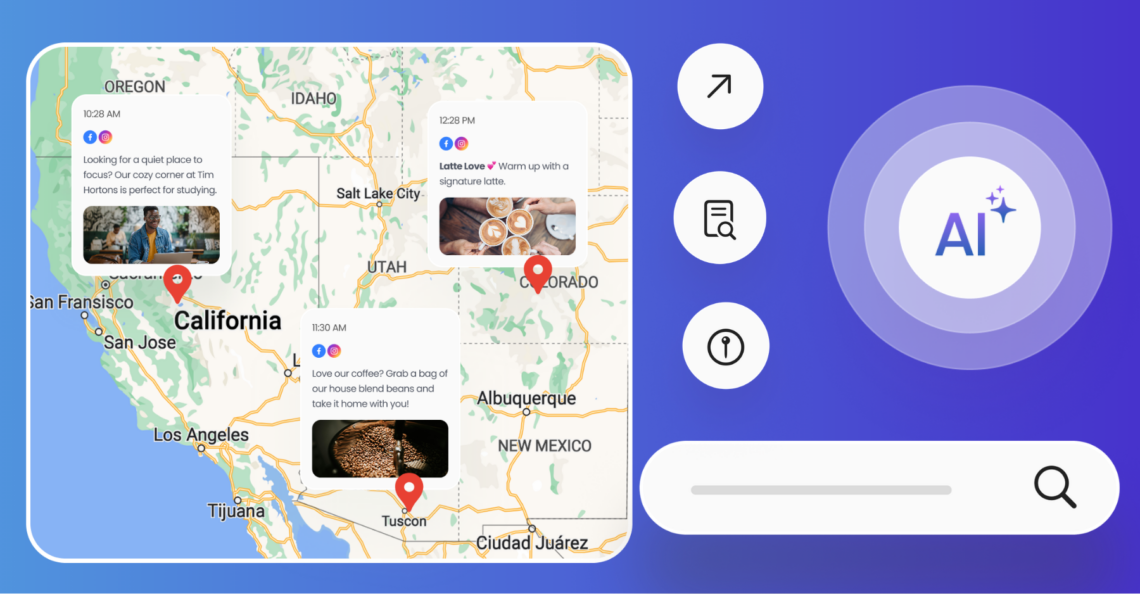
Looking towards completion of 2026, voice and visual search have become the dominant methods people connect with local brand names. A user might point their phone at a storefront and ask their AI assistant for the present wait time or a particular Google Business Profile Optimization. Geo-targeted material systems should provide the data "meat" for these AI interactions.If the underlying information system is not structured for these "headless" search inquiries, the brand name becomes undetectable in the most common search situations. This requires a shift from composing for readers to composing for data intake. Details needs to be modular, enabling an AI to pull a specific price, a set of hours, or a service description without needing to parse an entire webpage.
The Need of Regional Autonomy Within National Strategy
The most successful brand names in 2026 are those that enable for local autonomy within a nationwide method. While the core brand worths stay the exact same, local managers typically have the ability to "inject" local updates into the geo-targeted material system. This might consist of a photo of a regional team taking part in a regional charity drive or a momentary promotion for a local festival.This hybrid technique ensures that the material system never seems like a "cookie-cutter" option. By combining the power of main automation with the credibility of local input, brand names can control local search engine result. The winners in the 2026 market are those who acknowledge that "regional" is not a classification, but a specific physical truth for every single single client they serve.

Table of Contents
- – The State of Regional Search and Brand Distanc...
- – GBP Management and the Increase of Real-Time I...
- – Hyper-Localized Material at Scale
- – Incorporating Local Inventory and Service Data
- – Technical SEO Requirements for Geo-Targeted Sy...
- – User Experience and the "Last Mile" of Search
- – Managing Reviews and Regional Credibility
- – Information Personal Privacy and Localized Tar...
- – The Future of Localized Voice and Visual Browse
- – The Need of Regional Autonomy Within National ...
Latest Posts
The Future of Track Record Management for Local Seo
The Significance of Real-time Inventory in Local Browse
The Roadmap to Dominating Browse in Chino
Latest Posts
The Future of Track Record Management for Local Seo
The Significance of Real-time Inventory in Local Browse
The Roadmap to Dominating Browse in Chino